Fine-tuning Meta’s powerful open-source model has become a priority for developers and businesses alike. However, choosing the right hardware can make or break your project budget. When deciding on enterprise vs consumer gpus for fine tuning llama 3, you are forced to weigh massive VRAM capacity against raw cost-efficiency.
Let’s dive deep into the hardware specs, memory bandwidth, and architectural advantages to see which option reigns supreme for your specific AI workflow.
Understanding VRAM Bottlenecks and Model Sizes
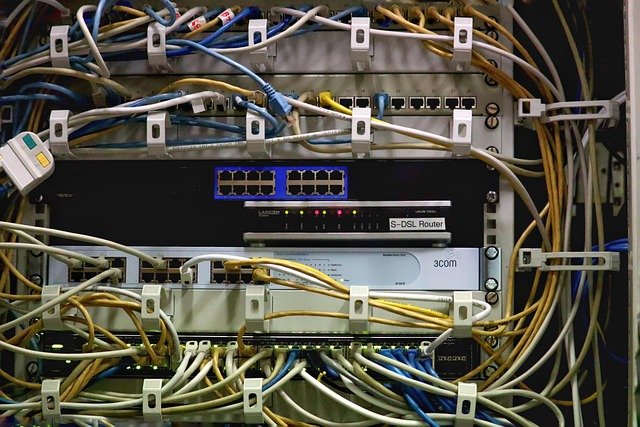
The single most important factor when fine-tuning Llama 3—whether you are working with the 8B or the massive 70B parameter variant—is Video RAM (VRAM). Consumer graphics cards are incredible for gaming, but they hit hard limits when loaded down with optimizer states, gradients, and model weights.
If you opt for a consumer card like the NVIDIA RTX 4090, you get 24GB of GDDR6X memory. That is plenty for full-precision or QLoRA fine-tuning of the Llama 3 8B model. However, trying to scale up to larger parameter sets without running out of memory requires aggressive quantization or multi-GPU bridging.
Enterprise cards like the NVIDIA A100 or H100 offer up to 80GB of high-bandwidth HBM3 memory. This allows data scientists to load larger batches, utilize unquantized weights, and execute full-parameter fine-tuning without constantly battling out-of-memory (OOM) errors.
Cost-Efficiency, Scaling, and Cluster Management
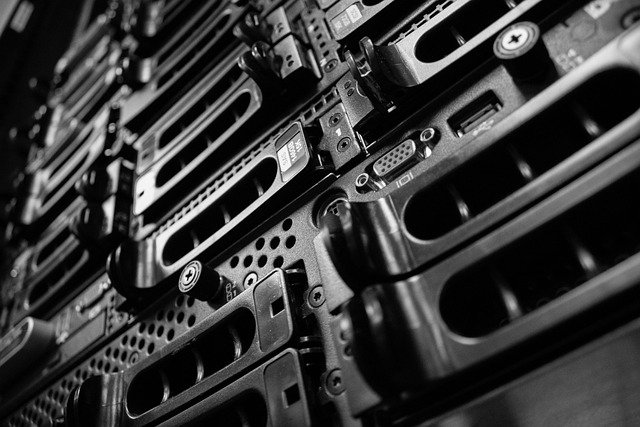
Budget is usually the ultimate decider for startups and independent researchers. Consumer GPUs offer an unmatched price-to-compute ratio. You can build a multi-GPU rig using high-end desktop hardware for a fraction of the cost of a single enterprise-grade accelerator.
Yet, enterprise hardware introduces features that traditional consumer setups simply cannot match. NVLink technology provides multi-terabyte-per-second interconnect speeds between enterprise GPUs, essentially merging their memory pools. For distributed training of Llama 3, this drastically reduces communication bottlenecks between nodes.
Furthermore, enterprise GPUs are built for 24/7 reliability, featuring ECC (Error-Correcting Code) memory to prevent silent data corruption during days-long training runs. If a consumer card crashes due to a bit flip 48 hours into a training job, you lose your checkpoint progress and time.
Software Support, CUDA, and Ecosystem Integration
The software ecosystem plays a massive role in day-to-day productivity. Both enterprise and consumer GPUs run on NVIDIA’s CUDA platform, meaning standard libraries like Hugging Face, PyTorch, and DeepSpeed work natively across both hardware tiers.
However, enterprise GPUs unlock specialized software toolkits designed for massive cluster orchestration and maximum inference throughput, such as NVIDIA TensorRT-LLM and Triton Inference Server. If your end goal involves deploying Llama 3 into an enterprise production environment with thousands of concurrent requests, the deployment pipeline is much smoother when trained on data-center-grade silicon.
For local experimentation, rapid prototyping, and smaller-scale fine-tuning tasks, consumer hardware gives you immediate, cost-effective access to cutting-edge AI capabilities without the heavy infrastructure overhead.
Frequently Asked Questions (Q&A)
Can I fine-tune Llama 3 70B on a consumer GPU?
Yes, but with heavy compromises. You would need a multi-GPU consumer setup running advanced techniques like QLoRA (Quantized Low-Rank Adaptation) to drastically reduce memory overhead. For native full-parameter fine-tuning of the 70B model, enterprise hardware with 80GB VRAM is practically required.
Is ECC memory really necessary for fine-tuning?
While not strictly mandatory for short jobs, ECC memory prevents bit flips that can silently corrupt your training weights over long epochs. For mission-critical enterprise deployments, ECC is strongly recommended.
How much VRAM do I need for Llama 3 8B?
A single 24GB consumer GPU (like the RTX 3090 or 4090) can comfortably handle fine-tuning the Llama 3 8B model using QLoRA or standard LoRA with reasonable batch sizes.
Tags: LLama 3, GPU fine tuning, enterprise hardware, AI training