Welcome back to the workbench, tech enthusiasts! If you are planning your next high-end gaming rig or a heavy-duty workstation build, you have likely been eyeing AMD’s AM5 platform. With the latest chipset releases, conversations around high-speed connectivity are louder than ever. Enthusiasts want to know how data flows through their systems, making the X870E motherboard PCIe 6.0 lanes breakdown one of the most heavily searched topics in the hardware community right now.
Building a future-proof machine requires understanding how every lane is allocated. Whether you are dropping in a next-gen graphics card or stacking multiple blazing-fast storage drives, knowing your board’s architecture prevents unexpected bandwidth bottlenecks. Let’s dive deep into the architecture and map out exactly where every lane goes.
Decoding the AM5 Architecture and Bandwidth Allocation
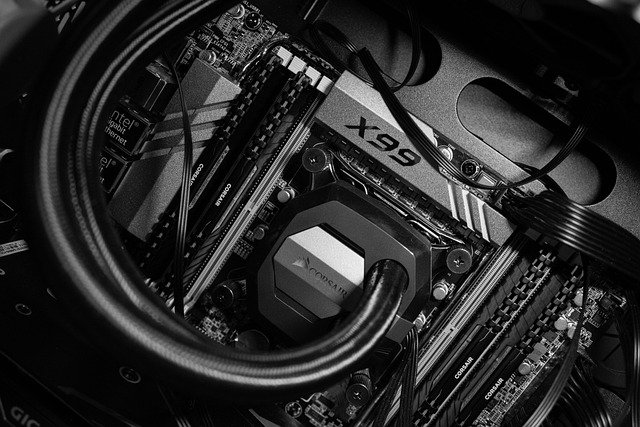
To truly appreciate the X870E motherboard PCIe 6.0 lanes breakdown, we first need to look at how AMD structures its Ryzen processors and high-end chipsets. The X870E platform utilizes a dual-chipset design paired with a capable AM5 CPU. This configuration essentially doubles the available downstream connectivity compared to standard consumer boards.
When evaluating modern hardware, builders often look for direct CPU lanes versus chipset-managed lanes. Direct CPU lanes offer the lowest possible latency, making them ideal for your primary graphics card and your fastest NVMe solid-state drive. Meanwhile, the chipset handles secondary expansion slots, USB4 controllers, and additional SATA or M.2 ports.
- CPU Direct Lanes: Reserved primarily for the main PEG slot and primary M.2 drive.
- Chipset Expansion: Distributed among secondary slots, peripheral controllers, and networking.
- USB4 Integration: Standardized on X870E boards, demanding dedicated high-speed pathways.
Graphics Cards, NVMe Storage, and the PCIe Evolution

A common point of confusion among builders revolves around generational transitions. While PCIe 5.0 has already cemented its place in high-end rigs, the horizon is shifting toward even faster standards. When analyzing the X870E motherboard PCIe 6.0 lanes breakdown, it is crucial to understand how hardware manufacturers manage lane sharing and bandwidth allocation under heavy loads.
If you populate every single M.2 slot on a flagship X870E board, you might trigger lane bifurcation. This is a technical term for splitting a physical x16 link into smaller chunks, such as x8/x8 or x8/x4/x4. For most gamers, this has zero noticeable impact. However, content creators moving massive 8K video files or working with massive datasets need to pay close attention to the manual.
Manufacturers use robust redrivers and retimers on X870E circuit boards to maintain signal integrity over longer traces. This ensures that even if your components are running at maximum capacity, packet loss and jitter remain practically nonexistent.
Future-Proofing Your Rig with X870E
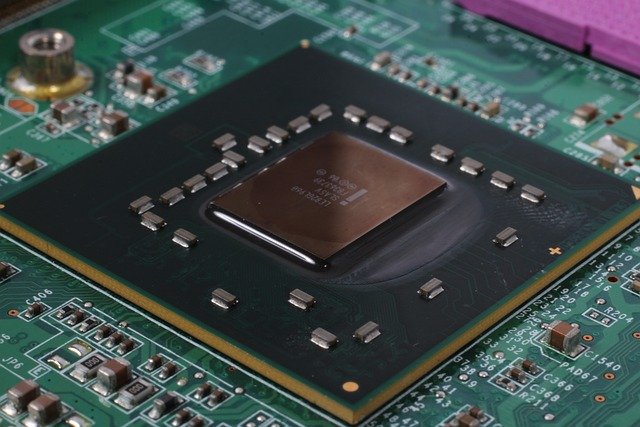
Investing in a top-tier motherboard is ultimately an exercise in longevity. By examining the X870E motherboard PCIe 6.0 lanes breakdown, you can determine whether a current-generation flagship will serve your upgrade path for years to come. AM5 has a guaranteed lifespan that extends far beyond initial processor generations, meaning today’s motherboard will likely support multiple CPU drops.
As external peripherals and internal storage drives continue to demand higher throughput, having a well-engineered circuit layout prevents your system from becoming a generation behind prematurely. Always check your specific vendor’s block diagram before buying to ensure your preferred hardware configuration operates at its absolute peak performance.
Frequently Asked Questions (Q&A)
Do X870E motherboards natively support PCIe 6.0 for graphics cards?
While the X870E platform introduces advanced signal integrity features and high-end routing to support future generational leaps, current consumer GPUs primarily operate on PCIe 4.0 or PCIe 5.0 standards. The architectural headroom is designed to accommodate upcoming hardware standards seamlessly.
Will using multiple M.2 NVMe SSDs slow down my graphics card?
On most flagship X870E motherboards, the primary PCIe slot connected directly to the CPU shares no bandwidth with the primary M.2 slot. However, populating secondary or tertiary chipset-driven M.2 slots on certain board layouts can occasionally trigger lane sharing. Always consult your motherboard manual’s storage configuration table to avoid unexpected compromises.
What is the main difference between X870 and X870E regarding lane distribution?
The primary difference lies in the use of a dual-chipset design on the X870E variant. This dual-chip setup provides extra silicon real estate on the PCB, allowing manufacturers to offer more high-speed USB4 ports, additional PCIe expansion slots, and extra connectivity options compared to the standard X870 chipset.
Tags: X870E, PCIe 6.0, AMD AM5, Motherboard, PC Hardware