If you are building or upgrading an AI workstation in late 2026, you already know that model sizes are scaling faster than ever. Training large language models, fine-tuning massive vision transformers, and processing petabytes of unstructured data require an infrastructure upgrade. One of the biggest bottlenecks in modern machine learning pipelines has always been data transfer between the system RAM and the GPU VRAM. That is precisely why choosing the best pcie 5.0 graphics cards for deep learning workloads has become a game-changer for AI researchers and enterprise engineers alike.
PCIe 5.0 doubles the bandwidth compared to the previous generation, offering a staggering 64 GT/s per lane. For deep learning, this means significantly reduced latency when offloading tensors, streaming datasets from high-speed NVMe storage directly to the accelerator, and managing multi-GPU scaling. Let’s dive deep into why this hardware standard is reshaping the future of artificial intelligence development.
Understanding PCIe 5.0 and AI Model Training Bottlenecks
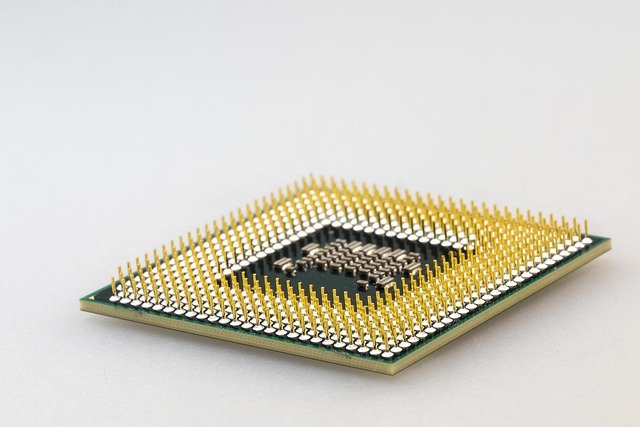
In a deep learning workflow, your GPU is only as fast as the data fed into it. When dealing with massive datasets that cannot fit entirely into GPU VRAM, your system constantly swaps data back and forth. On older PCIe 4.0 slots, this constant data thrashing creates a severe communication bottleneck, leaving your expensive tensor cores sitting idle waiting for inputs.
By upgrading to hardware optimized for the newest interface, data transfer speeds skyrocket. Here is why the shift matters for heavy compute:
- Lightning-Fast Dataset Streaming: Load multi-terabyte datasets directly from PCIe 5.0 NVMe drives without stuttering.
- Efficient Multi-GPU Interconnects: Seamlessly communicate across bridges without dropping packets or stalling epochs.
- Reduced Latency: Accelerate pipeline pre-processing steps handled by the CPU before feeding batches into the neural network.
Top Hardware Contenders for Next-Gen Neural Networks

The hardware landscape has evolved dramatically, pushing high-end workstation GPUs and enterprise accelerators to adopt the PCIe 5.0 standard. When looking for the best pcie 5.0 graphics cards for deep learning workloads, you need to balance raw FP16/FP8 tensor performance, high VRAM capacities, and thermal stability.
Enterprise-grade architectures now feature native support for these higher bandwidth limits, ensuring that massive parameter updates happen almost instantaneously. Whether you are running complex reinforcement learning simulations or managing enterprise generative AI pipelines, pairing these GPUs with modern motherboards and robust power supplies is essential to prevent thermal throttling during continuous training runs.
Optimizing Your Deep Learning Workstation Architecture
Buying the right card is only half the battle. To truly leverage the power of these advanced accelerators, your entire ecosystem must be tuned for maximum throughput. This includes investing in compatible enterprise motherboards, high-frequency DDR5 memory, and advanced cooling solutions to maintain peak clock speeds during weeks-long training jobs.
Furthermore, software frameworks like PyTorch and TensorFlow are continually updated to optimize memory allocation and device-to-device communication over faster lanes. Keeping your CUDA drivers, NCCL libraries, and operating system kernels updated ensures you get every ounce of performance out of your investment.
Frequently Asked Questions (Q&A)
Do PCIe 5.0 graphics cards work with older PCIe 4.0 or 3.0 motherboards?
Yes, PCIe standards are fully backwards compatible. A PCIe 5.0 GPU will physically fit and operate in a PCIe 4.0 or 3.0 slot. However, the card’s bandwidth will be capped at the maximum speed supported by your motherboard’s slot, meaning you will miss out on the speed benefits unless you upgrade your motherboard and CPU accordingly.
How much VRAM do I actually need for deep learning workloads in 2026?
It depends entirely on the scale of your models. For basic fine-tuning and inference tasks, 16GB to 24GB of VRAM is usually sufficient. However, for training modern large language models, multi-modal architectures, or working with high-resolution computer vision datasets, you should look for GPUs offering 48GB or more of high-bandwidth memory, or configure a multi-GPU setup.
Tags: Deep Learning, PCIe 5.0, GPUs, AI Hardware