Running large language models locally has completely transformed how developers, researchers, and tech enthusiasts handle privacy and custom automation. If you are tired of relying on cloud APIs or paying hefty monthly subscriptions, building a local AI rig is the ultimate power move. However, picking the right hardware can feel overwhelming.
The single most critical component in any local AI build is the graphics card. In this deep dive, we are breaking down the exact hardware you need to power your models efficiently.
Understanding VRAM and Architecture for AI Workloads
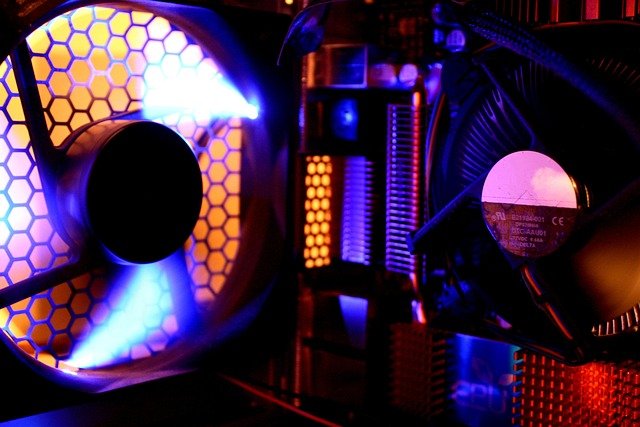
When it comes to local inference and fine-tuning, VRAM (Video RAM) is king. Unlike traditional PC gaming, where raw frame rates matter most, running local LLMs demands massive memory capacity to hold model weights. If a model doesn’t fit entirely within your GPU’s VRAM, it has to offload tasks to system RAM, which severely tanks your generation speed.
When searching for the best workstation gpu for running local llms 2024, you need to look beyond standard consumer metrics. Memory bandwidth, architecture support for quantization, and software ecosystem compatibility play massive roles. NVIDIA continues to dominate this space primarily due to the maturity of CUDA, TensorRT-LLM, and broad community support.
- Memory Capacity: 16GB is the bare minimum for running quantized 7B and 13B models comfortably.
- Memory Bandwidth: High-bandwidth memory ensures tokens generate rapidly without bottlenecking.
- CUDA Cores: Essential for fast tensor operations and smooth fine-tuning workflows.
Top GPU Contenders for Local LLM Deployments
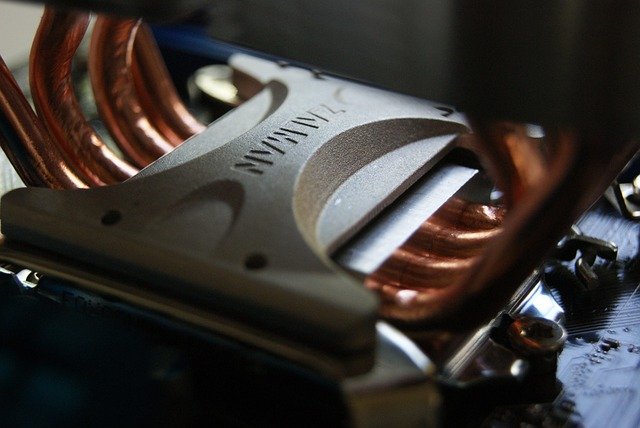
The market offers several standout options depending on your budget and specific workload requirements. Consumer flagships like the NVIDIA RTX series offer incredible value for money, while enterprise cards provide the enterprise-grade stability and massive VRAM pools required for larger 70B+ parameter models.
For most prosumers, striking a balance between cost and VRAM is the ultimate goal. Dual-GPU setups have also become increasingly popular for enthusiasts looking to scale their capabilities without jumping straight into enterprise pricing tiers. Careful motherboard selection is vital to ensure proper physical clearance and PCIe lane allocation if you go the multi-card route.
- Consumer Flagships: Deliver high clock speeds and great native driver support for everyday coding and inference.
- Workstation Cards: Feature massive VRAM pools, making them ideal for handling larger contexts and unquantized models.
- Multi-GPU Rigs: Perfect for scaling up VRAM affordably by linking two mid-tier cards together.
Optimizing Your Rig for Maximum Token Generation Speed

Choosing the right hardware is only half the battle; properly configuring your software environment unlocks the true potential of your setup. Utilizing frameworks like llama.cpp, ExLlamaV2, or Ollama allows you to squeeze every ounce of performance out of your graphics card.
Additionally, thermal management is crucial. Local LLM inference pushes GPUs to sustained 100% utilization for long stretches of time. Ensuring your workstation case has optimal airflow and robust cooling will prevent thermal throttling and extend the lifespan of your expensive components.
- Quantization: Use 4-bit or 5-bit GGUF formats to drastically reduce VRAM requirements with minimal loss in model intelligence.
- Cooling: Invest in high-static-pressure fans and check your case clearances before purchasing triple-slot enterprise or flagship cards.
- Power Supply: Always oversize your PSU to handle massive transient power spikes during heavy tensor computations.
Frequently Asked Questions (Q&A)
How much VRAM do I need to run a 70B parameter model locally?
To run a 70B model comfortably using 4-bit quantization, you will need at least 48GB of VRAM. This typically requires a multi-GPU setup, such as two 24GB consumer cards linked together, or an enterprise workstation card.
Are AMD GPUs viable for running local LLMs?
Yes, AMD GPUs are becoming more viable thanks to ongoing improvements in ROCm and community-driven backends. However, NVIDIA remains the gold standard because almost all AI frameworks natively prioritize CUDA for maximum stability and speed.
Is system RAM a good substitute for GPU VRAM?
System RAM can be used via CPU offloading, but it is significantly slower than GPU VRAM due to lower memory bandwidth. For real-time chat and fast code completion, running entirely on GPU VRAM is strongly recommended.
Tags: GPU, Local LLMs, AI Hardware, Workstation, PC Building