Welcome to the absolute bleeding edge of computing hardware. If you are designing a high-performance machine for AI training, massive video rendering, or enterprise data processing, standard consumer parts just will not cut it. You need next-generation architecture. Planning a PCIe 6.0 server motherboard for workstation build projects gives you access to unprecedented bandwidth, doubling the throughput of previous generations and redefining what a desktop rig can achieve.
Why PCIe 6.0 Changes the Game for Workstation Power Users
For years, PCIe 4.0 and 5.0 have handled our graphics cards, fast NVMe storage arrays, and networking cards with ease. However, modern workloads have evolved faster than the bus. Artificial intelligence model training, large language models (LLMs), and uncompressed 8K video pipelines demand incredible amounts of data transfer between the CPU, RAM, and accelerators.
By moving to a PCIe 6.0 server motherboard for workstation build configurations, you bypass traditional bottlenecks. PCIe 6.0 achieves an astonishing 64 GT/s per lane, doubling PCIe 5.0 capabilities through the use of PAM4 (Pulse Amplitude Modulation 4-level) signaling instead of traditional NRZ. For developers and engineers, this means zero lag when transferring massive datasets between GPUs and storage.
Choosing the Right Server-Grade Components and ECC Memory
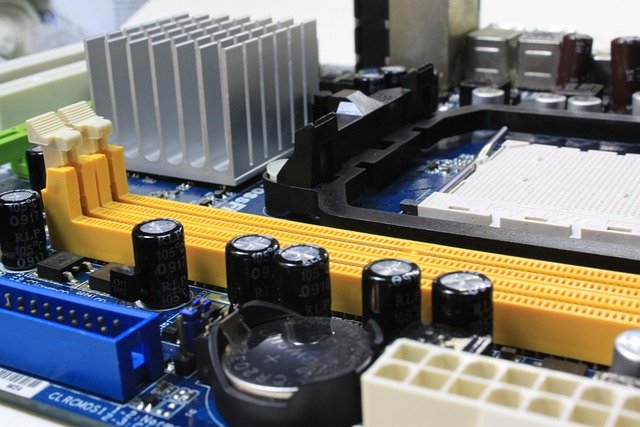
Integrating a server-grade motherboard into a workstation chassis requires a shift in how you select supporting hardware. Server boards are designed for enterprise reliability, meaning they utilize distinct form factors like E-ATX or EEB, and they require heavy-duty power delivery systems. You will also need to pair your board with compatible enterprise processors—such as AMD EPYC or Intel Xeon scalable processors—that support massive multi-channel memory architectures.
Another major benefit of utilizing a PCIe 6.0 server motherboard for workstation build setups is robust Error-Correcting Code (ECC) RAM support. When you are running long render queues or deep learning epochs over several days, memory corruption is the ultimate enemy. Server motherboards paired with ECC memory ensure data integrity at every single clock cycle, preventing catastrophic system crashes halfway through a critical project.
Cooling, Chassis Compatibility, and Power Delivery
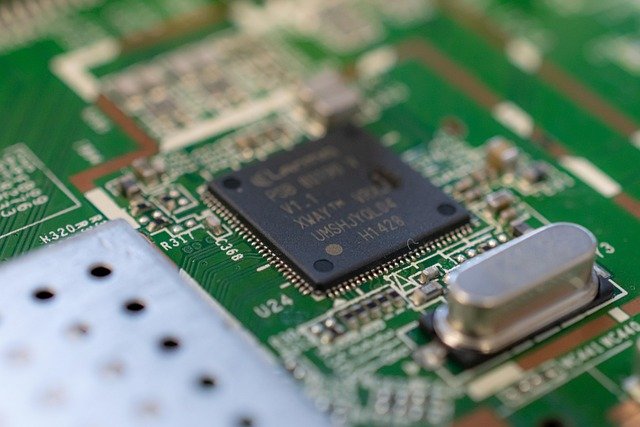
With massive data bandwidth comes substantial heat and power draw. PCIe 6.0 infrastructure pumps data at rates that generate significant thermal stress on both the motherboard chipset and the connected expansion cards. When putting together a PCIe 6.0 server motherboard for workstation build project, your cooling strategy cannot be an afterthought. You will need high-static-pressure fans, robust liquid cooling loops for the CPU, and specialized heatsinks equipped with active fans for your PCIe 6.0 NVMe drives and GPUs.
Power management is equally vital. Server boards require redundant, high-wattage Power Supply Units (PSUs) featuring specialized server-grade power connectors. Make sure your workstation enclosure can physically accommodate these larger power supplies and the extended length of server-class motherboards. Proper cable management and airflow design will keep your investment running at peak efficiency for years to come.
Frequently Asked Questions (Q&A)
Can I use consumer GPUs on a PCIe 6.0 server motherboard?
Yes, PCIe is fully backward and forward compatible. You can easily plug standard consumer graphics cards into a PCIe 6.0 server motherboard for workstation build setups. While consumer GPUs currently operate on older PCIe standards, they will function properly, though they will be limited to their native generation speeds until next-gen enterprise or consumer cards catch up.
Is a server motherboard overkill for a standard video editing workstation?
It depends entirely on the scale of your projects. If you edit standard 4K footage, a high-end consumer desktop motherboard is likely sufficient. However, if you work with uncompressed 8K multi-stream footage, heavy real-time VFX simulations, or local AI generation models, the architectural benefits of a server-grade platform provide a massive productivity boost.
Tags: PCIe 6.0, Workstation Build, Server Motherboard, PC Hardware